

Karin Caldwell
Professor Emeritus
Prof. Karin D. Caldwell, University of Uppsala, Sweden, The University of Utah, USA
Karin Caldwell received her Ph.D. degree in biochemistry from the University of Uppsala, Sweden in 1968, under the supervision of Prof. Jerker Porath, a pioneer of biological chromatography and enzyme immobilization. Years of postdoctoral work with Prof. J. Cal Giddings in Chemistry at the University of Utah introduced her to field-flow fractionation (FFF) as am emerging analytical tool and separation technology. She was appointed Research Assistant Professor of Chemistry in 1979 and promoted to Research Associate Professor of Chemistry in 1982. In 1985 Dr. Caldwell accepted a position as Research Associate Professor of bioengineering at Utah and assumed the directorship of the University of Utah’s Center for Biopolymers at Interfaces, an interdisciplinary research program involving 25 faculty across 5 University colleges, all focused on fundamental interfacial phenomena between biological macromolecules and surfaces. In 1995, Dr. Caldwell was acting chair for Utah’s Department of Bioengineering for a year.
Dr. Caldwell’s research interests included separations methodologies, especially biological macromolecules, and particularly using FFF, and interfacial analysis, particularly of polymeric biomaterials. She also published her work on surface modifications for blood contacting materials, protein immobilization on surfaces and cell separations. Dr. Caldwell was awarded the Utah Governor’s Medal for Science and Technology in 1992.
She was active in hiking and ski mountaineering along the Wasatch Front. In addition, she was the president of the Swedish Heritage Society of Utah and held board positions for over 2 decades in the Wasatch Mountain Club and the Utah Symphony Guild. Dr. Caldwell passed away on January 18, 2026 as Professor Emeritus at University of Utah.
Edward B. Clark
Adjunct Professor
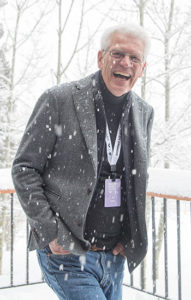
Many knew Dr. Clark because he served in so many different formal and informal leadership roles throughout his 26 years at the University of Utah. Most recently, he was completing a sabbatical as a fellow at the Kem C. Gardner Policy Institute; this followed his service as U of U Health Associate Vice President for Clinical Affairs, President of the University of Utah Medical Group, Professor in the Department of Pediatrics, as well as adjunct professor for Biomedical Engineering and Obstetrics/Gynecology. His service to university and academic medical community notably included more than two decades as Chair of the Department of Pediatrics at U of U Health and Chief Medical Officer for Intermountain Primary Children’s Hospital. The tremendous impacts of his illustrious career are found throughout our university and communities.
Carl Hodson Durney
Professor Emeritus
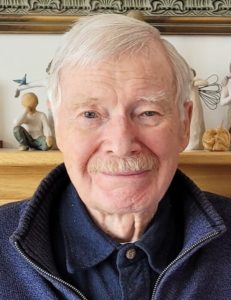
Carl Hodson Durney, a beloved University of Utah professor of electrical engineering and bioengineering who spent 34 years with the university and is known for his contributions to the dosimetry of electromagnetic fields for models of the human body and animals. Durney’s research focused on electromagnetic field theory, physical electronics, electromagnetic biological effects and medical applications, and he is known worldwide for his research in NMR imaging, hyperthermia for cancer therapy, and mechanisms of electromagnetic-biological interaction. He is the principal author of the four editions of the Radio Frequency Radiation Dosimetry handbooks and wrote multiple editions of Introduction to Modern Electromagnetics and Basic Introduction to Bioelectromagnetics. In his academic career, he has published more than 120 research papers that have been cited more than 4,000 times.
Jarmila Janatová
Professor Emeritus
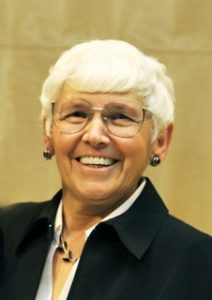
Fondly known as “Dr. JJ” by her students and colleagues, she navigated life with a generous and kind heart. Passionate about her children, science, music, art, and the outdoors, she managed to weave these facets of her life together seamlessly with fortitude and grace. Dr. Janatová retired as Professor Emeritus from the University of Utah. As a researcher, Dr. Janatová made significant contributions regarding the structure and function of immune system proteins. In 2020, the International Complement Society selected Dr. Janatová to be among the first set of recipients of the ICS Pioneering Women Award for her important discoveries pertaining to the thiolester bond in complement proteins.
Sung Wan Kim
Adjunct Professor
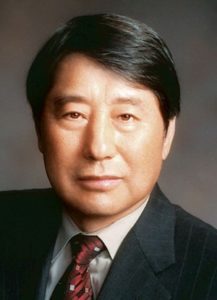
Dr. Kim has been a pillar of the University of Utah and is recognized nationally and internationally as a pioneer in the field of pharmaceutics. He published more than 500 papers, received dozens of patents, trained 130 students and postdocs, and founded successful companies. He received numerous prestigious awards, including the Volwiler Research Achievement Award, the Dale E. Wurster Research Award in Pharmaceutics, the Ho-Am Prize, an honorary doctorate from the University of Twente, and election to the Institute of Medicine and National Academy of Engineering. The Sung Wan Kim Chair in Drug and Gene Delivery is supported by an endowment honoring Dr. Sung Wan Kim, a pioneer in drug delivery and biomaterials research, who was Distinguished Professor of Pharmaceutics and Pharmaceutical Chemistry and Distinguished Professor of Biomedical Engineering.
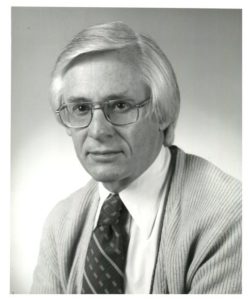
Donald J. Lyman
Professor Emeritus
Dr. Lyman was well-known for innovative biomedical polymer science and analytical characterization, blood-contacting materials, and protein interfacial science. He began and was director of Utah’s Biomedical Engineering Center for Polymer Implants, with research focused on new polymer developments for medical applications, innovating polymer membranes, vascular implants, nerve implants, ostomy implants and sutures. On the recommendation of Dr. Kolff, Dr. Reemstma invited Dr. Lyman in early 1969 to join the University of Utah, offering him research and teaching appointments in both the College of Medicine and the College of Engineering. Attracted not only by the opportunity to work with Dr. Kolff but equally by the atmosphere of excellence and cutting edge research that permeated the University under the leadership of President James Fletcher (who later headed NASA) and others such as Dr. Reemtsma and the renowned hematologist Dr. Maxwell Wintrobe, Dr. Lyman embarked on a 20-year stint at the University of Utah.
Donald B. Olsen
Professor Emeritus
Olsen, who was Professor Emeritus in the U’s departments of biomedical engineering and surgery as well as president of the Utah Artificial Heart Institute, was a veterinarian who implanted early prototypes of the Jarvik-7 artificial heart into animals – mostly calves and sheep – and was instrumental in developing the final design of the device that was implanted into patient Barney Clark in 1982. “Dr. Olsen was a great man who was crucial to the development of mechanical circulatory support – not just the total artificial heart,” said Craig Selzman, chief of the Division of Cardiothoracic Surgery and surgical director of the Cardiac Mechanical Support and Heart Transplant program at the University of Utah. “His contributions to science were massive and provided the foundation for artificial organs. Along with [artificial heart pioneer, Willem Kolff], Dr. Olsen represents one of Utah’s true medical innovators. His legacy will long live within the walls of this university and inspires future generations of researchers in heart failure and heart pumps.” He was a professor of surgery at the University of Utah as well as a research professor in the then bioengineering (now biomedical engineering) and pharmaceutics departments. He was director of both the U’s Center for Artificial Hearts and Medical Devices and the Institute for Biomedical Engineering. He also was president of medical devices company, SynCardia, as well as vice president of research and development for Micromed Technology, Inc., in Texas. He retired as president of the Utah Artificial Heart Institute at the age of 82.
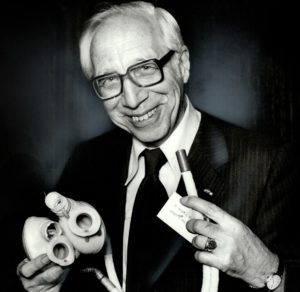
Willem Johan Kolff
Professor Emeritus