
Obsessive-compulsive disorder (OCD) is a neurological disorder that affects nearly 3% of the population worldwide and severely impacts their daily lives. Many current treatments are given to help relieve OCD symptoms, such as exposure and response prevention (ERP) therapy and medications, but there are many who do not respond to these methods. In such cases, deep brain stimulation (DBS) therapy is utilized for severe, treatment-resistant OCD. This is achieved by surgically implanting electrodes in the brain to deliver targeted electrical stimulation. This treatment has proven to be quite effective in lowering symptoms of OCD but does not reduce the symptoms of depression that are found in more than half of OCD patients. There is limited evidence for how depression and OCD are connected neurologically. Dr. Johnson and Dr. Shofty strive to remedy this with their new study titled, “Multimodal Biomarkers of Depression in Treatment-Resistant Obsessive-Compulsive Disorder.”

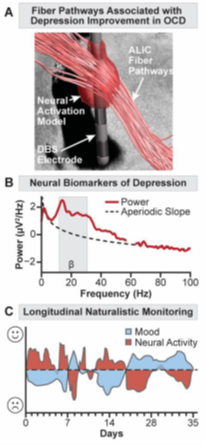
Depression within OCD has shown to reduce quality of life, increase suicide risk, and negatively affect the outcomes of treatment. It is Johnson and Shofty’s hope that understanding and analyzing brain signatures and activity between the two disorders will lead to improved DBS therapy that is individualized to target symptoms. Their research will be conducted with two aims: identifying multimodal biomarkers of depression in OCD and evaluating long-term brain activity in daily life through DBS devices.
Johnson and Shofty will first identify the brain patterns and severity of depression and then determine what pathways are stimulated when depression improves. This will be collected by in-clinic recordings and neuroimaging to establish a comprehensive picture of how DBS currently affects depression.
A six-month patient study will then be conducted using new DBS recording technology to examine brain activity during naturalistic daily life. Patients will regularly report symptoms to identify if there is any correlation between brain activity and changes in depression.
Johnson and Shofty’s work is crucial to understanding and comprehending the brain networks underlying depression in OCD. It is with this data that researchers will potentially be able to develop methods of brain stimulation that are symptom-targeted from their specific brain activity and patterns. The Johnson lab hopes to be able to lay down the foundation for improving mental health treatments that are more targeted towards symptoms for psychiatric and neurological disorders.
Dr. Johnson spoke of the impact this research strives to make, “Our vision is to be able to tailor DBS to alleviate symptoms based on each individual’s unique brain physiology and network organization. Ultimately, we hope to make major strides toward improving the lives of individuals who have been suffering from mental health challenges.”
The study was awarded a grant from the 1U4U Mental & Behavioral Health Seed Grant Program, a University of Utah program that supports cross-campus/cross-disciplinary research.